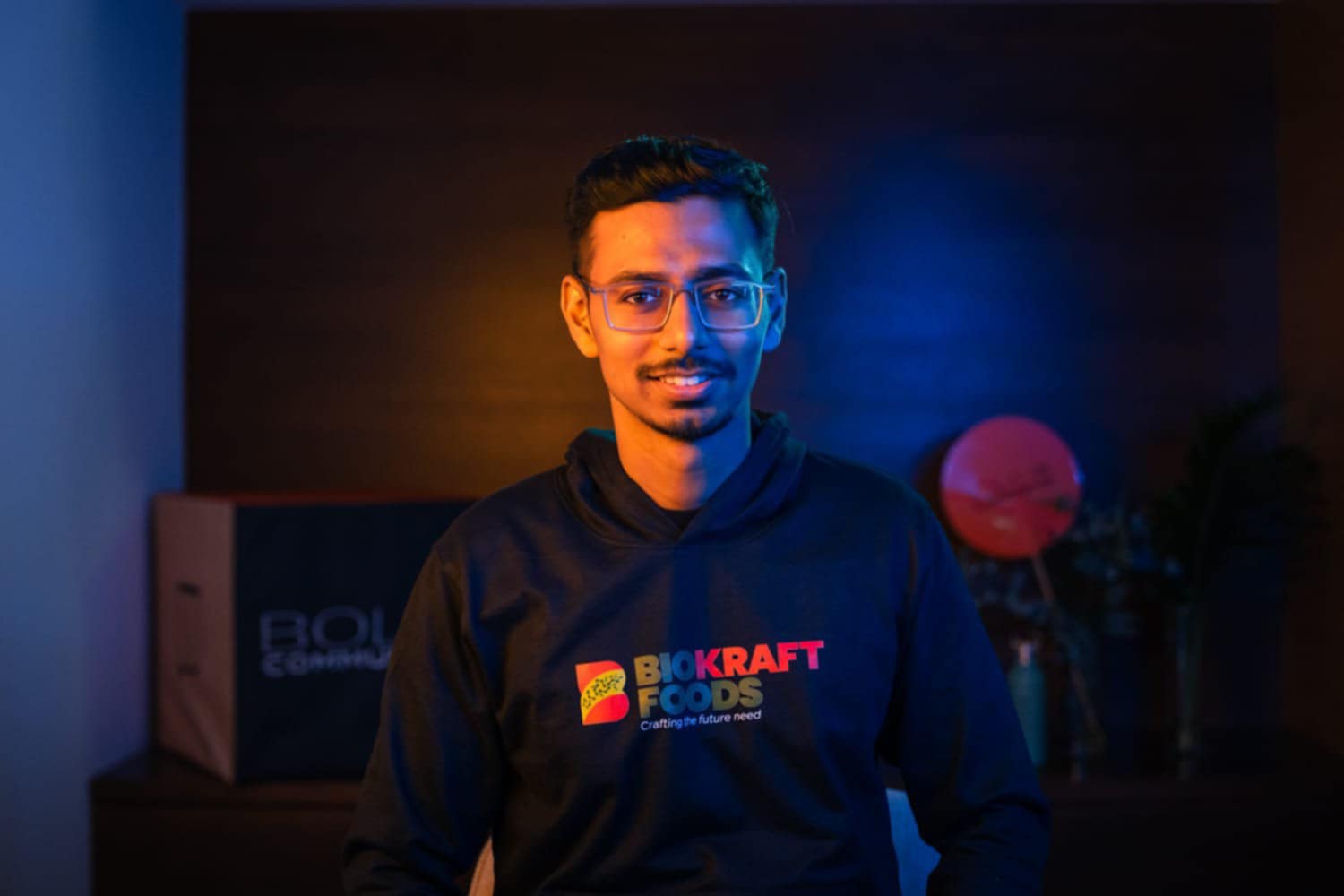
In Mumbai’s dynamic food industry, a quiet revolution is brewing. At its forefront is Biokraft Foods, a biotech startup led by Kamalnayan Tibrewal, a name quickly becoming synonymous with food innovation. We sat down with Tibrewal to explore Biokraft’s mission to bring cultivated meat to India, a journey driven by both passion and pragmatism.
From Biotech to the dinner plate
Kamalnayan Tibrewal, with a background in biotech and green technology from ICT Mumbai, developed an early fascination with how technology could transform food. His path to cultivated meat was ignited by a strong desire to tackle the environmental and ethical challenges of traditional meat production.
“Seeing the potential for 3D bioprinting to create sustainable, cruelty-free meat made me realise this was more than a career path—it was a chance to drive meaningful change,” Tibrewal shares.
The launch of Biokraft Foods marked a pivotal moment. Key milestones quickly followed, including the successful internal market validation of their cultivated chicken meat, which is now undergoing external validation with hotels and cafes. High-profile invitations to speak as an expert panellist at events like Anuga FoodTech India, and collaborations on cultivated trout development with ICAR-DCFR, underscore their rapid progress. “These milestones affirm that we’re on the right track to making a real impact,” he notes.
Cultivating a sustainable future
Tibrewal’s vision is clear: to create a world where sustainable, ethical meat is accessible to all, without compromising on taste or quality. He aims for Biokraft Foods to lead the way in cultivated meat technology, addressing global challenges from food security to animal welfare and environmental sustainability.
“Our work is helping normalise the idea of cultivated meat in India,” Tibrewal explains, emphasising their role in bridging the technology-to-consumer acceptance gap through awareness campaigns, tasting sessions, and strategic partnerships. Biokraft also actively inspires young food technologists and entrepreneurs to explore innovative, sustainable solutions for the industry.
Overcoming challenges, celebrating triumphs
Venturing into cultivated meat in India’s nascent ecosystem comes with its hurdles – funding, technology development, regulatory clarity, and consumer skepticism are all significant. Tibrewal credits persistence, strategic collaborations, and constant innovation for overcoming these. Their approach is rooted in iterative testing, gathering feedback, and maintaining resilience.
A standout moment for him was witnessing the raw reactions of people tasting Biokraft’s cultivated chicken meat for the very first time. “The positive feedback during our internal market validation and the excitement of external collaborators made all the hard work worthwhile,” he beams.
Outside of work, Tibrewal delves into reading about technology and entrepreneurship, explores new food trends, and finds inspiration in networking. Balancing the demands of a startup with personal life is a challenge he navigates through effective delegation and setting firm boundaries. Curiosity, resilience, adaptability, continuous learning, and building strong connections are traits he believes are vital for success. His philosophy? “Progress over perfection.”
The road ahead
Looking forward, Tibrewal envisions Biokraft Foods becoming a global leader in cell-based food production, scaling operations, entering new markets, and making cultivated meat affordable and accessible. He sees the cultivated meat field expanding rapidly, driven by technological advancements and growing consumer awareness.
“I plan to contribute by pushing the boundaries of innovation, collaborating with industry leaders, and making cultivated meat a mainstream choice,” he affirms.
For aspiring entrepreneurs facing similar struggles, Tibrewal offers steadfast advice: “Stay persistent, believe in your vision, and be open to learning. Surround yourself with people who support and challenge you. Challenges are part of the journey—embrace them as opportunities to grow.”